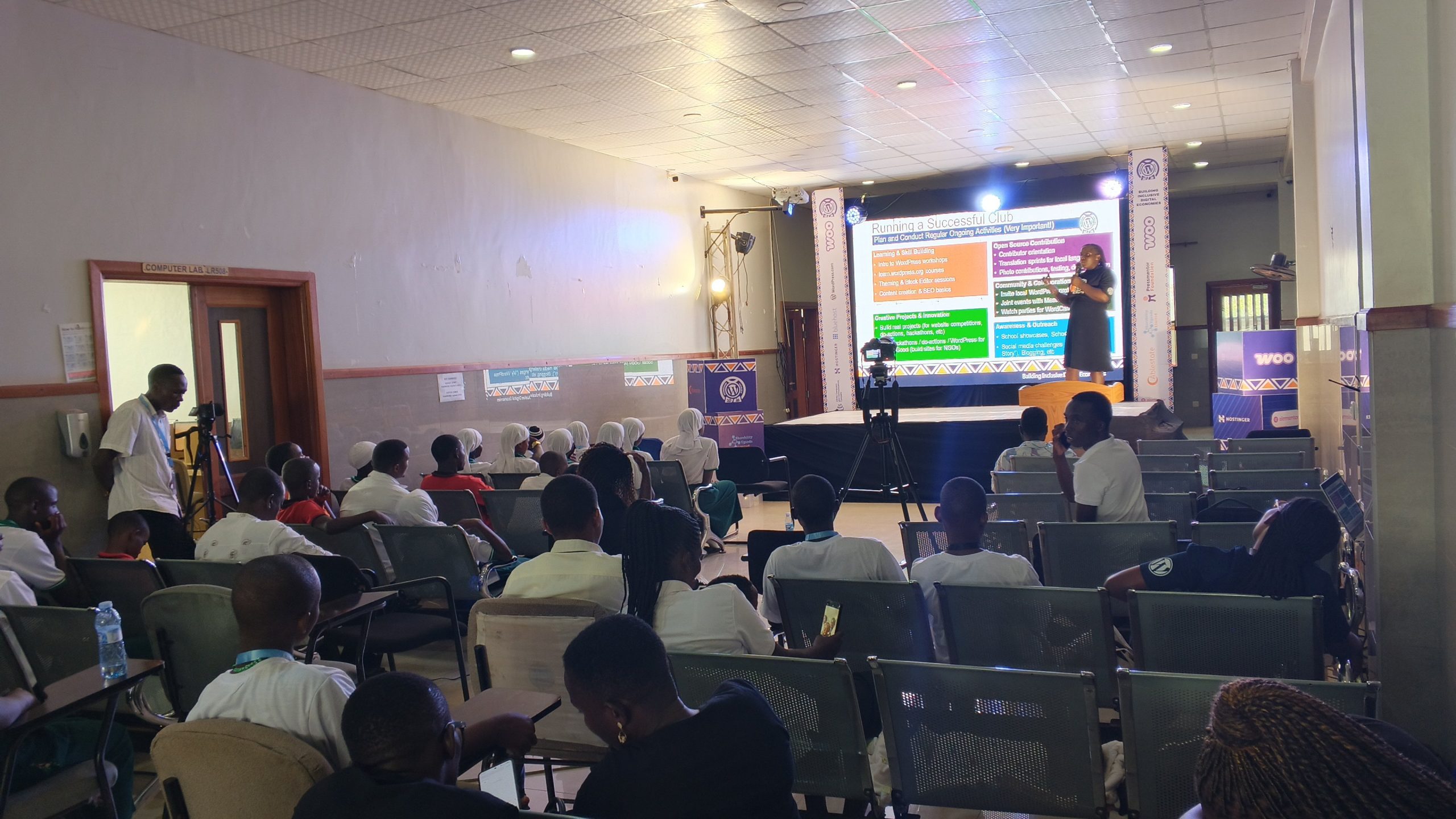
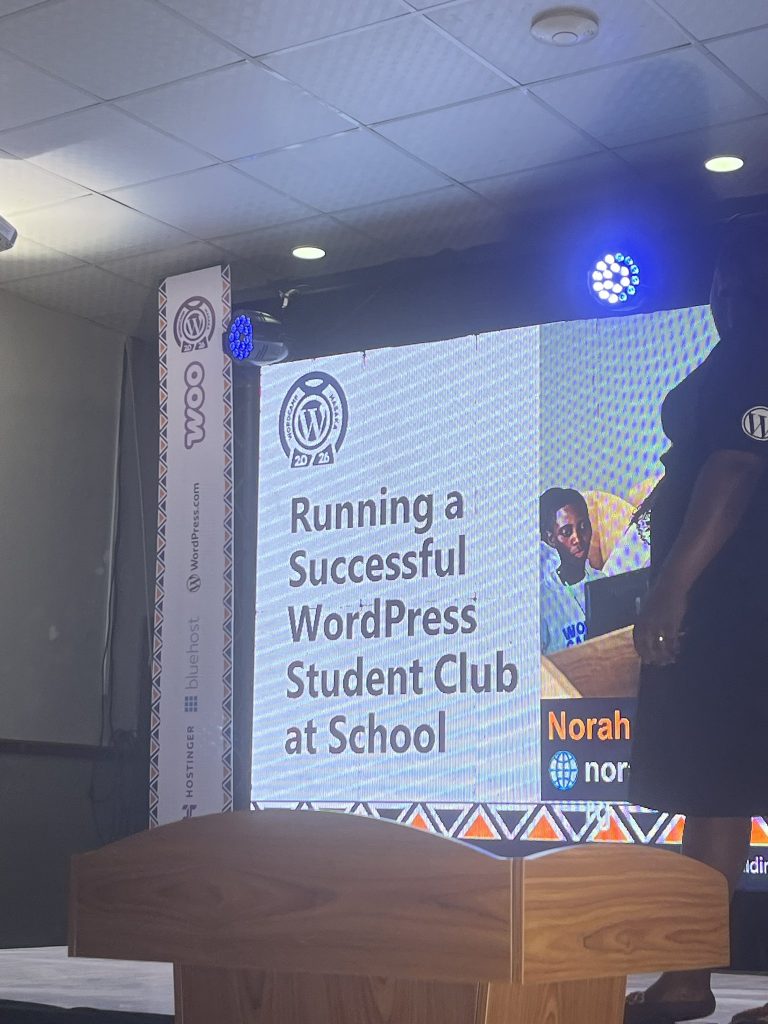
At WordCamp Masaka 2026, I had the privilege of speaking on “Running a Successful WordPress Student Club at School.” As an EdTech Trainings Facilitator at Sharebility Uganda Limited and someone who has mentored ICT and EdTech clubs across Uganda through the #EdifyEdTech project, this session was an opportunity to share practical strategies for helping schools build sustainable student-led technology communities.
The presentation explored how WordPress Student Clubs can bridge the digital skills gap by equipping learners with practical web development, leadership, and collaboration skills while introducing them to the global open-source community.
Why WordPress Student Clubs Matter
Across Uganda and Africa, many students leave school with limited opportunities to apply digital skills in real-world settings. WordPress Student Clubs address this challenge by creating spaces where learners can practice, collaborate, innovate, and contribute to meaningful projects.
These clubs help students:
- Bridge the digital skills gap.
- Learn practical website development and digital publishing.
- Develop creativity, leadership, and teamwork.
- Understand the principles of open-source software.
- Become creators and contributors rather than just consumers of technology.
During the session, participants reflected on existing school clubs, how schools support them, and the outcomes they have achieved. This discussion highlighted the importance of creating clubs that not only engage students but also produce measurable impact within their schools and communities.
Understanding WordPress Student Clubs
According to the official WordPress Student Clubs initiative, these clubs are designed to empower students to build local communities that learn, share knowledge, and grow together through WordPress.
Unlike one-off workshops, Student Clubs provide year-round opportunities for learning, mentorship, collaboration, and participation in the global WordPress ecosystem.
Students gain access to practical learning experiences while becoming part of a worldwide community of developers, designers, content creators, translators, educators, and contributors.
How to Start a WordPress Student Club
Starting a successful club begins with a few committed individuals and a clear vision.
The recommended process includes:
- Forming a core team of two or three motivated students.
- Identifying a faculty advisor or patron.
- Setting achievable goals for the first three to six months.
- Applying through the official WordPress Student Clubs program.
- Participating in the onboarding process.
- Receiving an official club website and supporting resources.
- Partnering with a nearby WordPress Meetup community to launch the club through a Campus Connect event.
Uganda already has active WordPress Meetup communities in Kampala, Entebbe, Jinja, Masaka, Lira, Mukono, Gulu, Luweero, Kaliro, and Mbarara, making it easier for schools to find mentors and community support.
Building a Strong Leadership Structure
One of the strongest predictors of a successful Student Club is effective leadership.
Every club should establish a structure that includes:
- A Faculty Advisor or Patron to provide guidance and ensure compliance with school policies.
- At least two Student Co-organizers to distribute responsibilities and ensure continuity after graduation.
- Volunteers responsible for content creation, design, publicity, and social media.
- A mentor from the local WordPress community to provide technical support and mentorship.
This shared leadership model encourages ownership while ensuring the club remains active from one academic year to the next.
Running a Successful Club
A thriving WordPress Student Club is built on consistent learning, collaboration, and innovation.
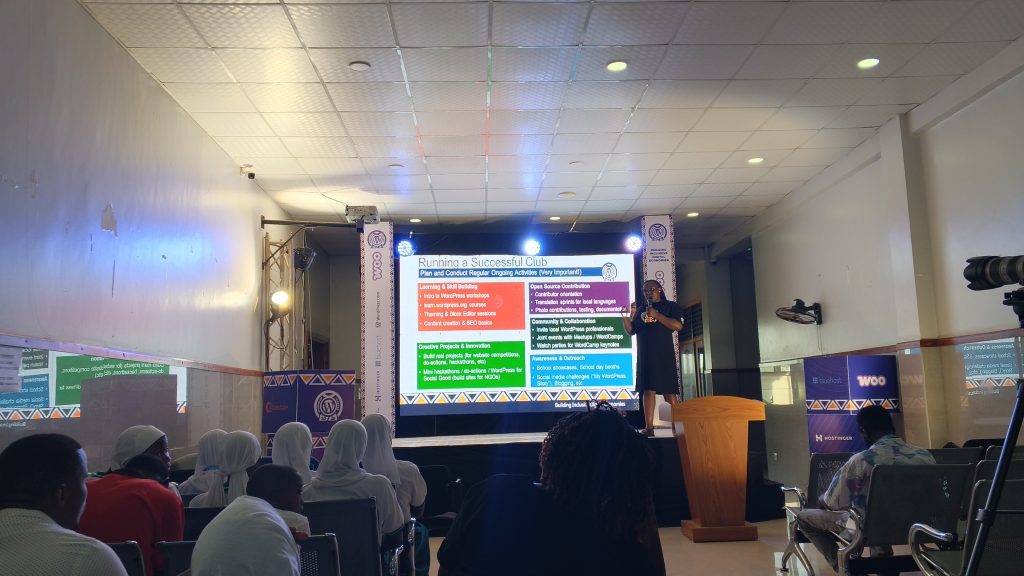
Continuous Learning
Students should regularly participate in:
- Introduction to WordPress workshops.
- Learn.WordPress.org courses.
- Block Editor and Full Site Editing sessions.
- Website design projects.
- Content writing and blogging.
- Search Engine Optimization (SEO) basics.
Open-Source Contributions
Students should also be encouraged to contribute to WordPress by participating in:
- Contributor orientation sessions.
- Local language translation projects.
- Documentation improvements.
- Testing new WordPress features.
- Photo contributions.
These activities help learners understand the importance of giving back to the open-source community.
Community Engagement
Successful clubs build strong relationships beyond the classroom by:
- Inviting local WordPress professionals to speak.
- Participating in WordPress Meetups and WordCamps.
- Organizing watch parties for WordPress events.
- Collaborating with other schools and technology communities.
Innovation Through Real Projects
Learning becomes more meaningful when students build real solutions.
Examples include:
- School websites.
- Community websites for NGOs.
- Website competitions.
- Mini hackathons.
- DoAction events.
- “WordPress for Social Good” community projects.
These practical experiences help students build portfolios while solving real challenges within their communities.
Lessons from Supporting EdTech Clubs
Having supported numerous ICT and EdTech Clubs across Uganda, I shared several practical lessons that have contributed to long-term sustainability.
One recommendation is for every club to develop a customized constitution that aligns with the school’s policies. This provides clarity on governance, leadership, financial management, and club operations.
Schools should also consider introducing affordable membership contributions that support club activities such as printing materials, purchasing networking equipment, organizing workshops, or hosting exhibitions. Proper financial accountability, working closely with the school bursar, promotes transparency and long-term sustainability.
Common Challenges and Practical Solutions
Every Student Club encounters challenges, but most can be addressed with thoughtful planning.
| Challenge | Practical Solution |
|---|---|
| Low student participation | Organize engaging introductory events and interactive demonstrations. |
| Limited technical skills | Provide beginner-friendly workshops and step-by-step learning resources. |
| Limited internet access or devices | Adopt offline-first learning strategies and encourage collaborative group work. |
| Sustainability after student leaders graduate | Develop strong leadership structures, mentor future leaders, and secure active support from school patrons. |
Developing a Strong Club Constitution
One of the key resources shared during the presentation was a Sample ICT Club Constitution developed through Edify Uganda.
The document provides guidance on:
- Vision and Mission.
- Goals and Objectives.
- Membership requirements.
- Membership fees.
- ICT Day exhibitions.
- Meeting schedules.
- Leadership responsibilities.
- Elections.
- Constitutional amendments.
Schools are encouraged to customize this document to suit their unique context while maintaining strong governance practices.
The editable constitution can be downloaded from https://edify.org.ug/downloads/.
Benefits of WordPress Student Clubs
When implemented effectively, WordPress Student Clubs create value for students, schools, and teachers alike.
Students benefit through:
- Hands-on digital skills.
- Real-world project experience.
- Leadership development.
- Teamwork and communication skills.
- Global mentorship opportunities.
- Career pathways in web development, freelancing, and digital entrepreneurship.
Schools benefit through:
- Increased innovation.
- Enhanced digital reputation.
- Student-led technology projects.
- Stronger links with the global WordPress community.
Teachers benefit through:
- Access to modern teaching resources.
- Professional collaboration.
- Opportunities to mentor future technology leaders.
A Call to Action
Technology is no longer optional it is essential. Schools have an opportunity to prepare learners not only for examinations but also for the digital economy.
I encourage school administrators, teachers, and students to start a WordPress Student Club and become part of the global WordPress community. Take advantage of the official resources, connect with local Meetup communities, and create opportunities for learners to build practical skills that will serve them throughout their lives.
To learn more about starting a club, visit the official WordPress Student Clubs documentation:
You can also download the sample ICT Club Constitution and other educational resources from:
Together, we can empower the next generation of digital creators, innovators, and open-source contributors one WordPress Student Club at a time.


Leave a Reply